
.jpg)

Coiba Island feels different long before you arrive.
Part of that comes from distance.
Part of it comes from access.
And part of it comes from the fact that much of what defines the destination has intentionally remained unchanged.
Located off Panama’s Pacific coast, Coiba exists as one of the country’s most protected and least developed natural environments — a place where infrastructure remains minimal, access is controlled, and the surrounding marine ecosystem continues to operate with unusual continuity.
For travelers, this is not a destination approached casually.
It is reached intentionally.
Coiba is not defined by luxury in the conventional sense, but by the rarity of access to a place that remains largely untouched.
Reaching Coiba requires movement.
Most journeys begin from the Pacific coast near Santa Catalina, where departures by boat move steadily away from the mainland.
As the coastline recedes, the experience shifts.
The ocean opens.
The sense of scale expands.
And the transition becomes part of the destination itself.
Unlike more accessible coastal regions, Coiba does not offer immediacy.
That distance is precisely part of its appeal.
Travelers often encounter the island through broader remote expeditions, where access and route planning shape the experience as much as the destination itself.
Wildlife, Marine Life & Protected Nature
Coiba’s defining characteristic is biodiversity.
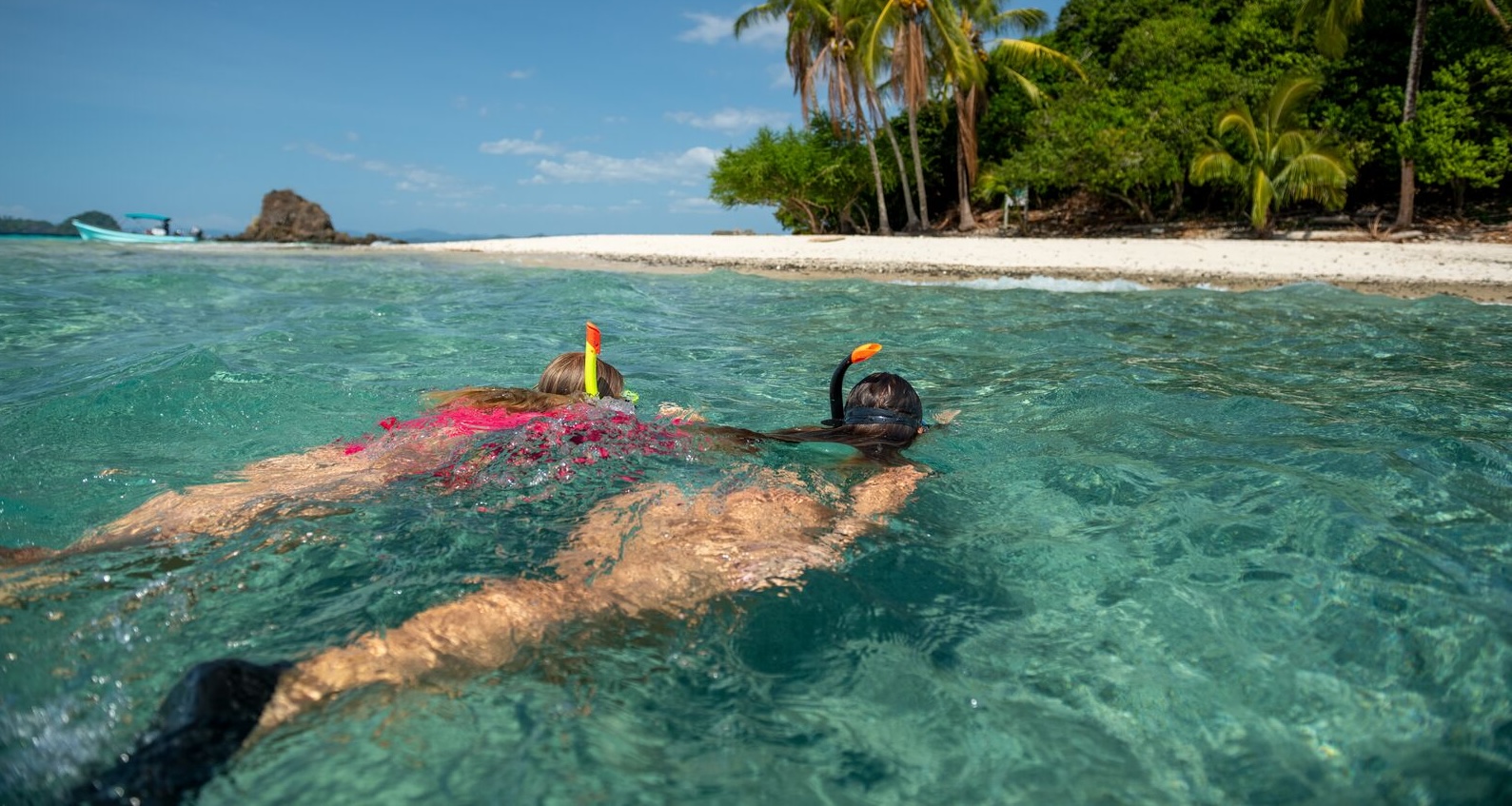
The island and its surrounding waters form one of the most significant marine ecosystems in the eastern Pacific.
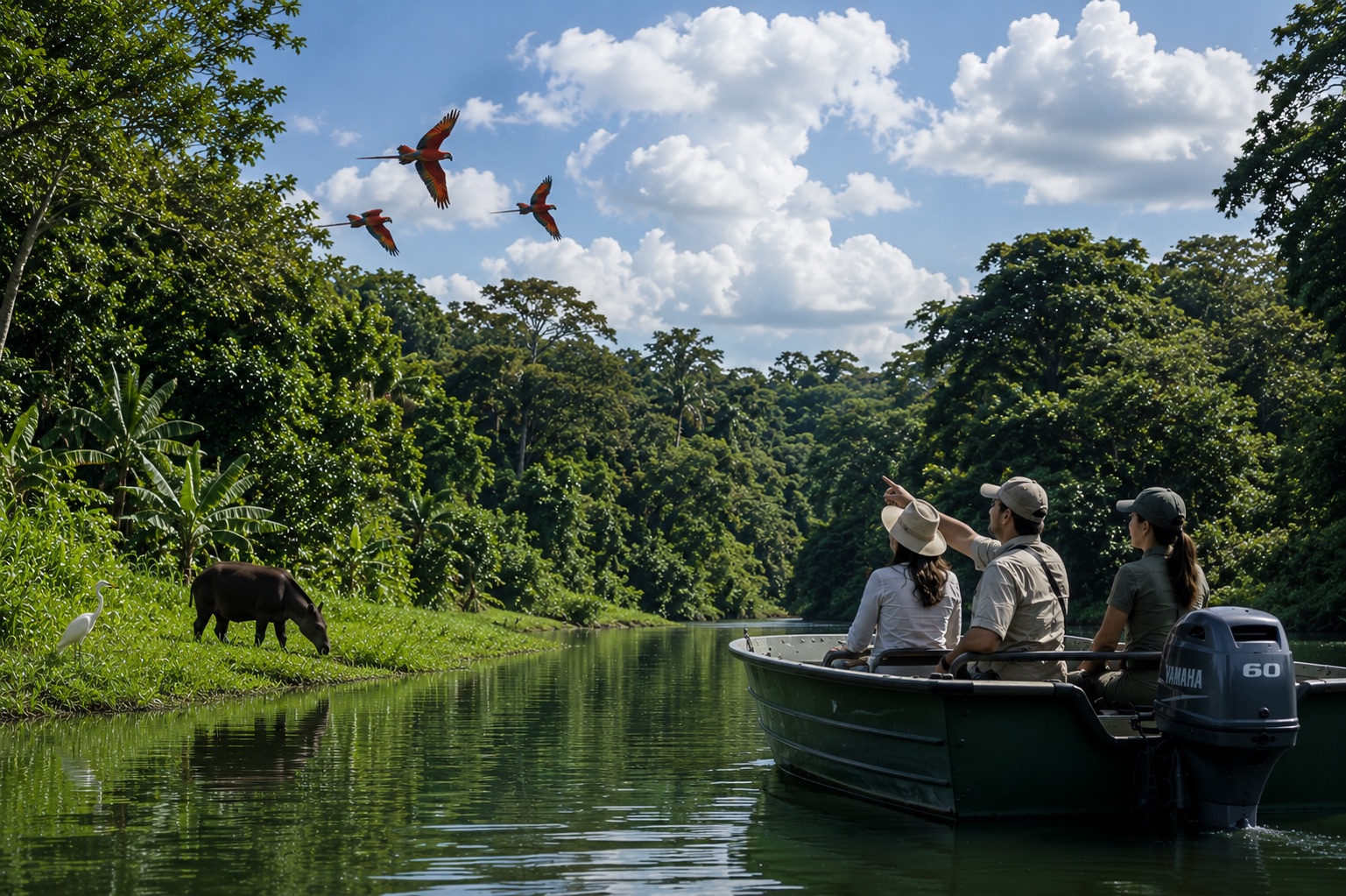
Wildlife encounters can happen both above and below the surface.
Marine species, coastal ecosystems, birdlife, and changing seasonal conditions create an environment that feels dynamic rather than static.
For many travelers, this naturally aligns with wildlife and birdwatching experiences, particularly when approached through a more immersive, observation-led lens.
The surrounding waters also connect naturally with the wider Gulf of Chiriquí, reinforcing Coiba’s place within a broader Pacific ecological network.
How Coiba Fits Into a Wider Journey
Coiba rarely works as an isolated standalone destination.
Its strongest role is often within larger Pacific-focused journeys.
Travelers may combine time around Coiba with Santa Catalina, broader marine exploration, or longer routes through regions like Veraguas.
Others integrate it as a contrasting remote segment within wider Panama itineraries that include urban, cultural, or mountain environments.
Timing also matters.
Weather, marine conditions, and seasonal changes significantly influence access and experience — making broader planning resources such as When is the Best Time to Visit Panama particularly relevant.
Coiba is best approached with flexibility.
Not rigidity.
Some destinations are visited. Coiba is reached.



.jpg)